"Vermont's Year Round Diversified CSA Farm"

You can eat fresh vegetables, and pasture-raised & grassfed meats from our farm YEAR ROUND!


Sunday, February 18, 2007

Happy Plowingtime Day!

Christa and Asa are in front of the new (used) farm truck on Valentines Day. Our Toyota Pickup truck is on the way out so we decided to look for a used truck with a larger bed and more power to haul a livestock trailer. We lucked out and saw an ad in the paper for a truck with a plow up in Underhill. We took a look at it, drove it around a bit and decided the farm should purchase it. The timing could not have been better!

The Nor'easter arrived on Valentines Day and by the next day we had 31 inches of new snow! Fortunately the air temperature was cold (single digits) enough to produce light snow. Nevertheless, we were busy over the next two days as the snow fell and we plowed our driveways, shoveled paths to the pigs and chickens, and shoveled snow away from the greenhouse and hoophouses. Fortunately we did not have any structures collapse, though quite a few dairy barns across the state did collapse and some animals were lost.

One of our Tamworth sows chose to farrow the evening of the storm. She farrowed 8 piglets, but only 4 were alive when I fed her the next morning. She eventually lost the remaining 4, probably due to crushing. She is a large sow and the space in the hoophouse we had her in was likely not big enough. That coupled with the cold weather may have been a contributor to the deaths.

The other pigs were having fun in the snow and taking a last lap around their field before the snow really piled up. The next day I had to shovel a path from their water and feeding area up to their hoophouse. They happily took off in single file down their snow trail!


Wednesday, February 07, 2007

Happy Birthday Pa!

My pa would have been 71 today. He was born in Minnesota in 1936 on the Fasching Family Farm. He was the youngest boy of 12 kids. When asked how big his family was when he was growing up, he was always fond of saying "I am one of 5 brothers and each of us has 7 sisters".

He was a good man and kind father raising 4 kids on his own. He taught me the value of hard work and schooled me in the old ways of working on a farm: making sausage, milking cows by hand, putting up hay with a pitchfork, caring for livestock, growing and making your own food, and shoveling manure. That upbringing surely shaped my life today.

I really miss him.

Monday, January 29, 2007

Visiting the Lambs

Asa is sizing up the lamb herd for the 2007 growing season.

We made a visit to a sheep farm up in Hyde Park, Vermont. A young couple has been raising sheep up there for nearly a decade. We went to see the quality of their lambs for a possible purchase this spring. They have a nice healthy group of animals overwintered in a large coverall barn (think large hoophouse).

We don't have our own breeding flock of sheep, so we purchase lambs in the spring from Vermont sheep farmers to raise on our pastures during the summer. In past years we have bought lambs from a few different farms, this year we will likely purchase all from one farm. Vermont farmers supporting Vermont farmers - makes me feel good!

Asa is drawn like a magnet to tractors, so we put him up on a nice little Kubota tractor at the sheep farm and he had a good time pretending to drive the fields. It won't be long before he can reach the pedals. Then my tractor driving days will be numbered!

Friday, January 19, 2007

Asa's Throne

Asa finally has a place at the table! I finished his handmade Windsor Highchair. It has two coats of milk paint (a great non-toxic finish) sea green over a coat of red. Then two coats of an oil varnish mixture rubbed out and finally a coat of paste wax for protection from spills. This is an heirloom chair that he can pass on to his kids, and his kids to their kids, and so on...

If you are interested in purchasing a handmade Windsor Chair (adult and/or child chairs) see my chairs and other handmade furniture at: www.jerichosettlersfarm.com/windsorchairs.html

Monday, January 15, 2007

What's for Lunch?

Todays Menu: local hay, winter pasture, and day old bread for dessert

Occasional menu items: outdated dairy products, cheese


The 4 Tamworth growers in the foreground are tearing into their meal. The breeding adults in the far background are doing the same. These groups are separated by two strands of electric fence. They sleep/nap in their hoophouse which is bedded down with mulch hay.

I have weaned the grower pigs and adults from feed grain for the following reasons:

  1. The cost of feed grain has gone up due in large part to new ethanol plants buying up midwest corn to convert to fuel,
  2. I would like to reduce inputs to the farm that travel long distances (and their associated transportation and fuel costs),
  3. I continue to look for ways to support other fellow Vermont farmers,
  4. I can reduce the waste stream by transferring outdated foodstuffs destined for the landfill to growing great pork (It truly boggles me just how much gets thrown away in our society).

The pigs are still getting grains, but in a different medium as bread. Adding local hay - which they do eat, and outdated dairy products makes for a diverse diet and ultimately a better tasting product. None of this is new, the old-timers used to feed pigs much in the same way and a fellow Vermont pig farmer raises great pigs with these foods and got me excited to do the same.

So if you see what looks like a homeless person digging through a bakery dumpster at night with a flashlight clenched between his teeth - don't be alarmed (and please don't call the cops). It's just your local farmer turning bread into pork!

Wednesday, December 20, 2006

Winter CSA


This past weekend was our 3rd distribution for our Winter CSA. Though its not much like winter in Vermont this fall with temperatures in the 40s and 50s.

Our shareholders picked up the following at our farmstand: lettuce greens from the fields- mesclun, spinach, arugula; carrots, onions, potatoes, leeks just pulled from the garden, parsley, celery root, 3 varieties of winter squash, garlic, scorzonera, parsnips, beets and turnips! Great local food for fall and winter meals. Our very popular Winter CSA continues into February!

We also have a variety of packaged meat cuts available (pork and grassfed beef), farm fresh eggs, and homemade Lard from our pigs. So stop by the farmstand to purchase some great holiday food, we are open from 10 am to 6 pm.

Tuesday, December 19, 2006

Pure Vermont Lard

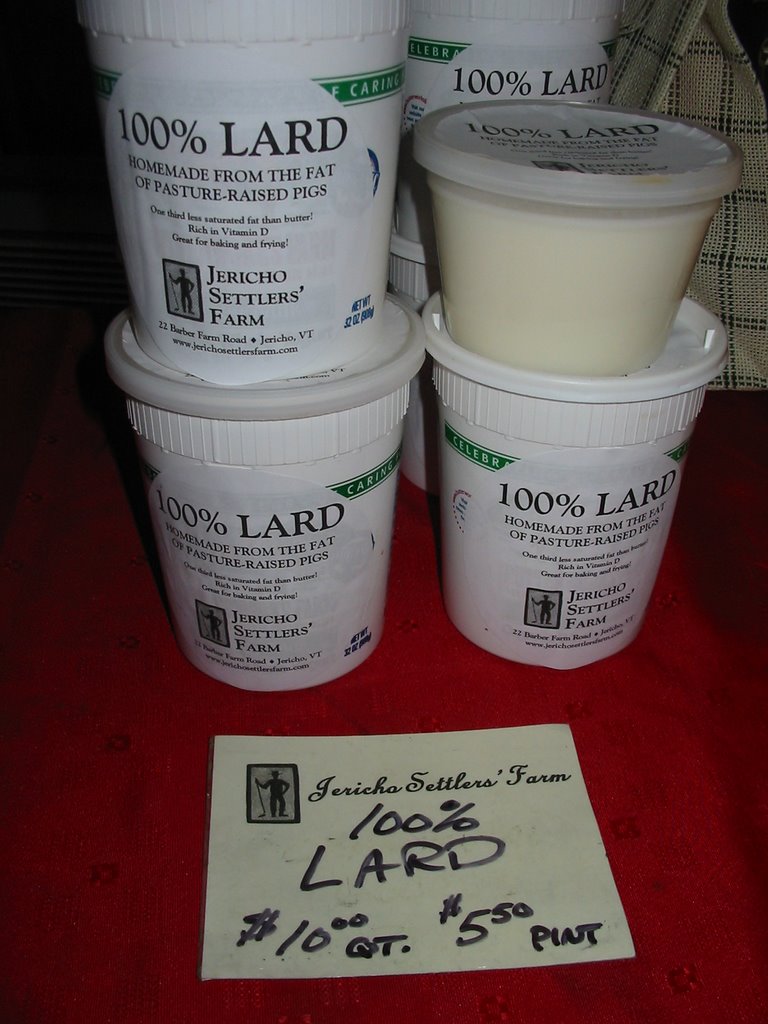
We spent the weekend rendering the Tamworth pork fat we got back from the butcher. Everything went smoothly and we made 8 quarts of 100% pure creamy lard from about 18 lbs of fat. Here is a great link for describing how to make lard.

Lard is a great in baking and makes the best pie crust - very flaky! It is a great source of Vitamin D - the pigs store it in their fat from the summer sunshine! Try finding pure lard in your grocery store - YOU CAN'T! Its only available from small farms like ours who take the time to make it.

Available at our farmstand - the first batch is almost gone. Don't worry we plan on making more!

Thursday, December 14, 2006

Happy Holidays!


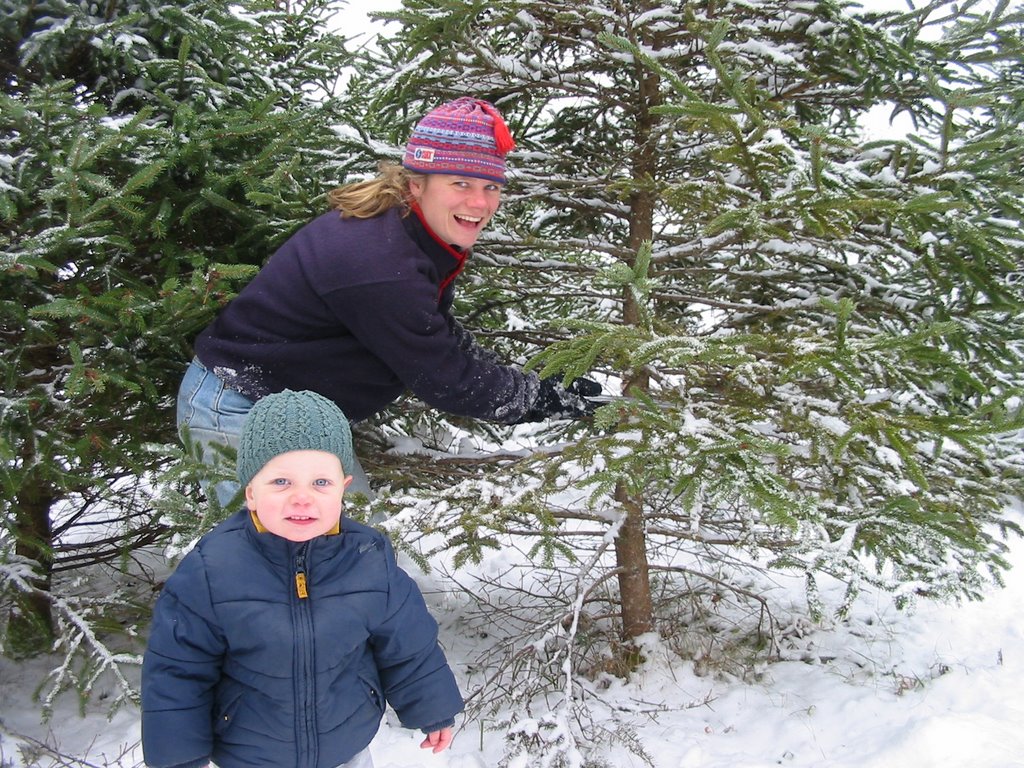
The cutting of the holiday tree was performed by Christa with oversight from Asa. Christa's brother has a small plot of christmas trees on the farm. He has a U-cut business every year for local folks to get a tree.

Have a happy holidays and eat some good food produced by your local farmer(s) this holiday season and throughout the year. Your health will thank you for it. Our holiday menu will feature ham from one of our pigs, root vegetables, salad greens, pickles and pumpkin pie from the garden. The only items not from the farm will be the beer (though if we are lucky it will be homemade) and dairy products.

Monday, November 27, 2006

Pasture-raised Pork Chops!

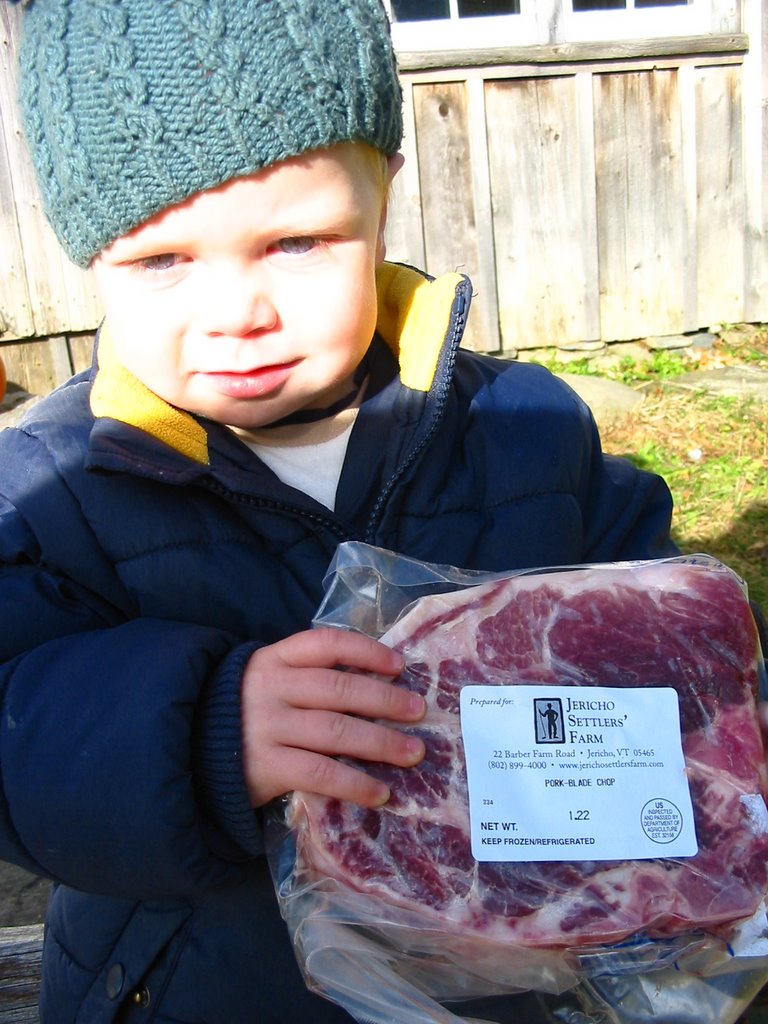
Asa holds a blade-steak chop from our heritage breed of pasture-raised pork. Look at the color and marbling of that pork chop! For comparison, go to the supermarket and look at what the pork industry (confined pigs on concrete, 100% grain diet, antibiotics and hormones added) produces and packages. Which meat would you rather eat and which farm would you like to support?

The taste and flavor of our pork is amazing. How do we do it? We give the pigs room to roam, rotating them through pastures. They drink fresh water and eat a diverse diet consisting of pasture, worms, grubs, cheese, garden vegetables, apple drops and Vermont milled grains.

Friday, November 17, 2006

piggly wigglys

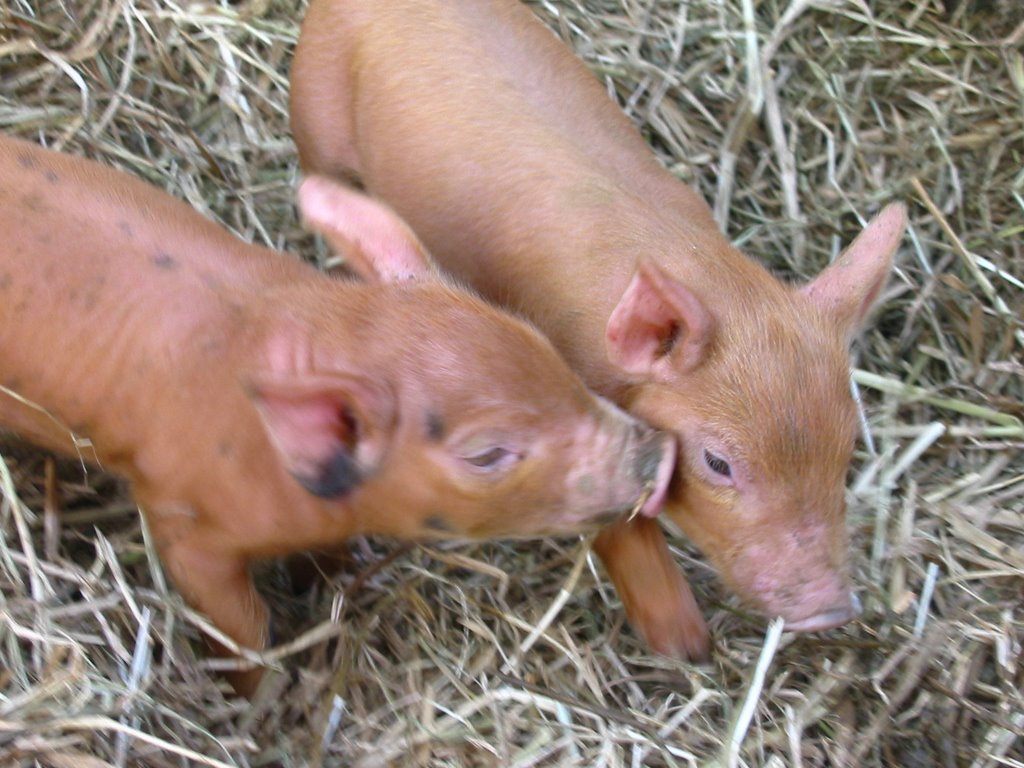
The Farm's first piglets! The two Tamworth sows we recently purchased just had piglets about a week apart. The first sow was bred to a purebred Tamworth boar, the second sow (in photo) was bred to a berkshire boar. Her piglets came a week after the first sow. They have some black spotting on them. All are healthy. Each sow farrowed 11 piglets and each lost one when we found the new piglets in the morning- so they ended up with 10 piglets each.

Both sows are in the same section of the hoophouse we built for them this fall. They share a well bedded space that is 10 x 25 ft in size and they also co-nurse. All the piglets sleep together in a pile and when a sow lays down and turns on her side they all run up to nurse. We will wean the piglets from the sows in about a month. The piglets will continue to stay in their section, the mama sows will be turned in with the boar for breeding.

Thursday, November 02, 2006

Planting the Stinking Rose


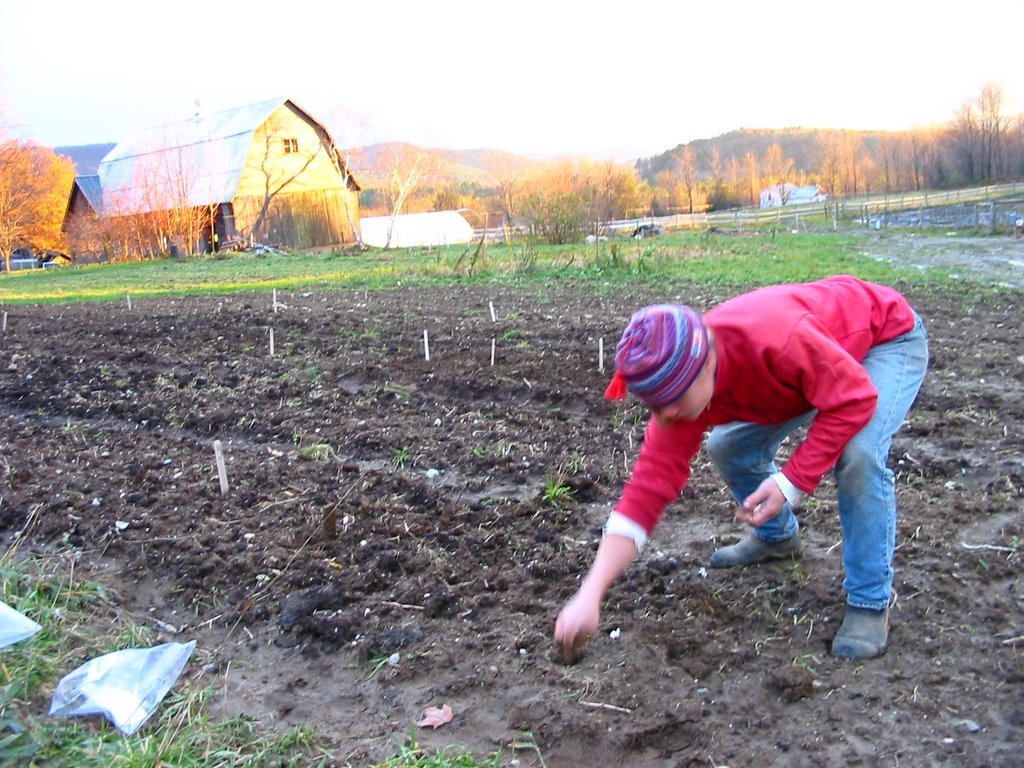
Christa planted nearly 3000 bulbs of garlic this fall! I didn't get a chance to help her as I was building the livestock hoophouse - so she can claim all the credit and glory for next years garlic crop. She is planting some new varieties that we recieved from a friend down the road. He is a botany professor that loves garlic so we swapped varieties. We also swap garlic with non-botanists.

You can always tell when winter is coming - Christa starts to wear her ski beanie. I don't think she has ever planted garlic without a beanie on her head!

Multi-use Hoophouses


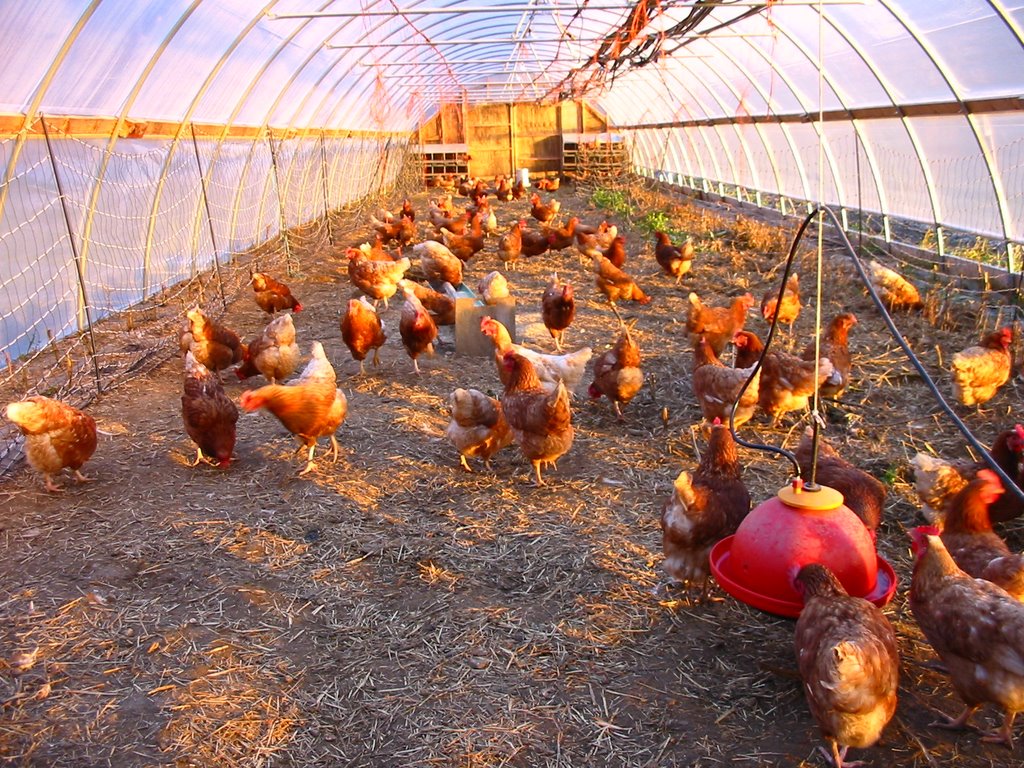
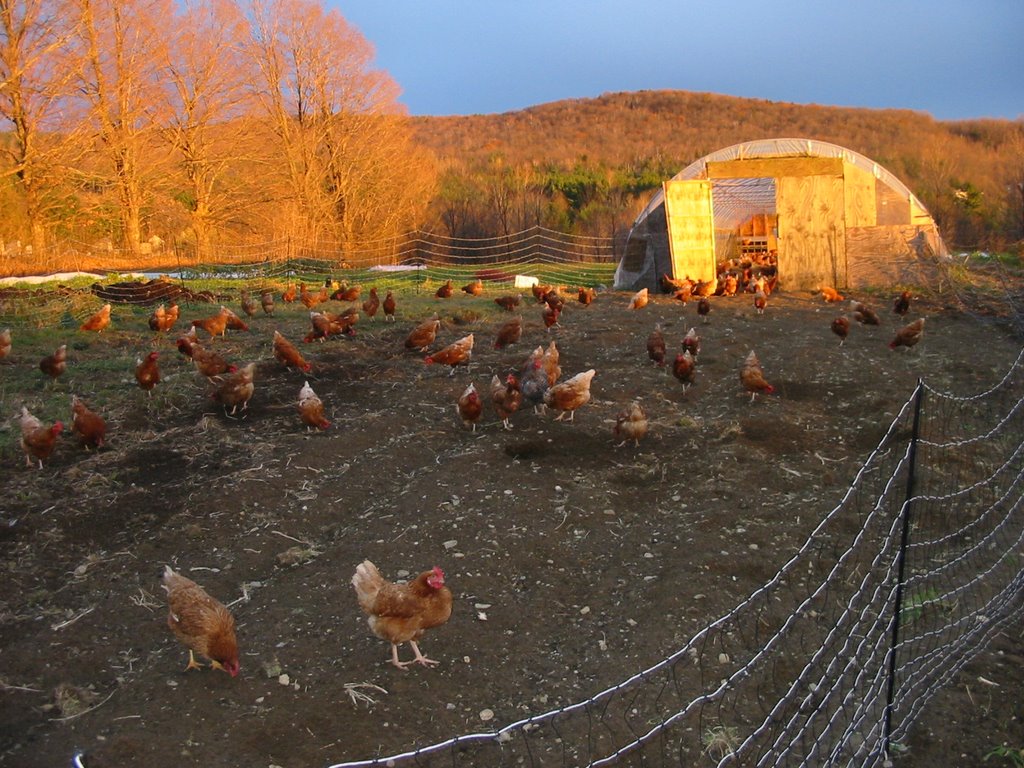
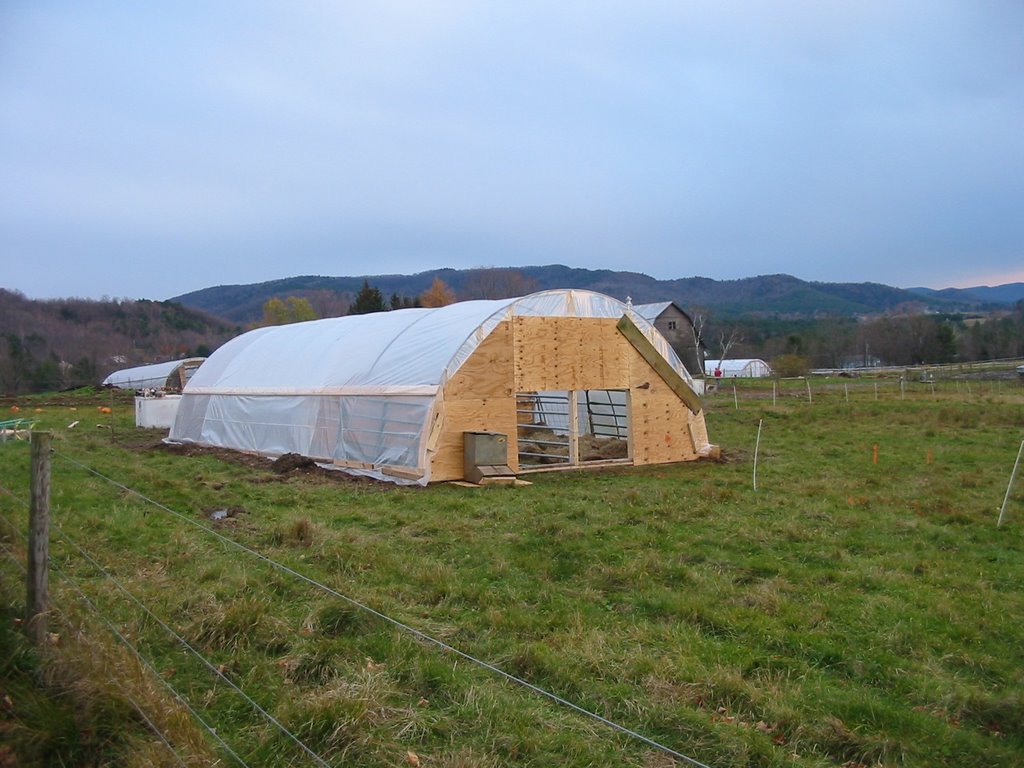
I am a hoophouse convert! These are great structures for growing vegetables and flowers. You can extend the growing season on both ends (early spring, late fall) by using a hoophouse. It is an unheated structure with one layer of greenhouse plastic. The only heat generated inside the hoophouse is during a sunny day - unless you add some animals! Which is what we are doing this year. We are overwintering 200 laying hens in our 20 x 96 ft hoophouse that grew tomatoes, peppers, and celery root this summer. The hens get to roam out on the garden beds and use the hoophouse to get out of bad weather, for water and to lay eggs in their nestboxes. The nest boxes are attached to the plywood end wall near the doors (at the far end in the photo to the right. When the snows come -and they will its Vermont after all- the hens won't journey onto the snow, so we will add mulch hay to the inside of the hoophouse for them to pick through for grass seeds and to absorb their manure. In the spring when we let them out into the pastures we will compost the mulch hay that has accumulated. It eventually will make it back onto our fields as finished compost!

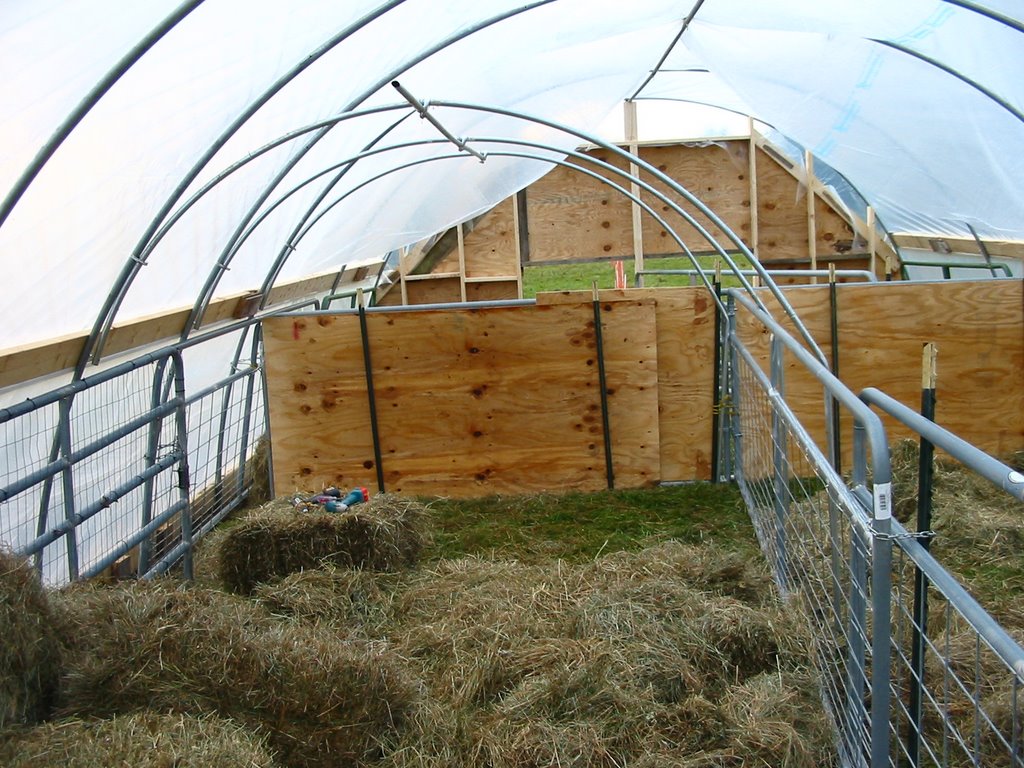
We built another section of hoophouse within the fenced pasture this fall. We had enough hoops from our used hoophouse frames we bought last year to build this 40 ft long section. This hoophouse will house our breeding group of sows, and some young pigs that we are growing out for spring processing. This house has an electrical box and a water hydrant in it -for watering pigs and keeping water from icing up by using electric de-icers in the water tubs. Hauling 5 gal pails of water out to pigs in the deep, dark, icy grip of winter is no fun! The pigs always have access to the pasture. They get 9 acres of fenced pasture to roam during the winter if they choose, they can use the hoophouse during bad weather and for sleeping quarters. The sows are free to use it for farrowing. Adding alot of dry mulch hay during the winter and the heat from a sunny winter day will keep everyone warm and dry. Pigs do fine outside in the winter and in snow - they just need a place to get out of the wind. Once spring arrives we will get the pigs onto their pasture paddocks and free up the hoophouse to grow vegetables and/or flowers. All the accumulated mulch hay will be composted and later added to the gardens.

We believe in using our structures year 'round, that is the beauty of being a small diversified farm. If we only grew vegetables these structures would be dormant for about 5 months.

Friday, October 13, 2006

Vermont Prosciutto

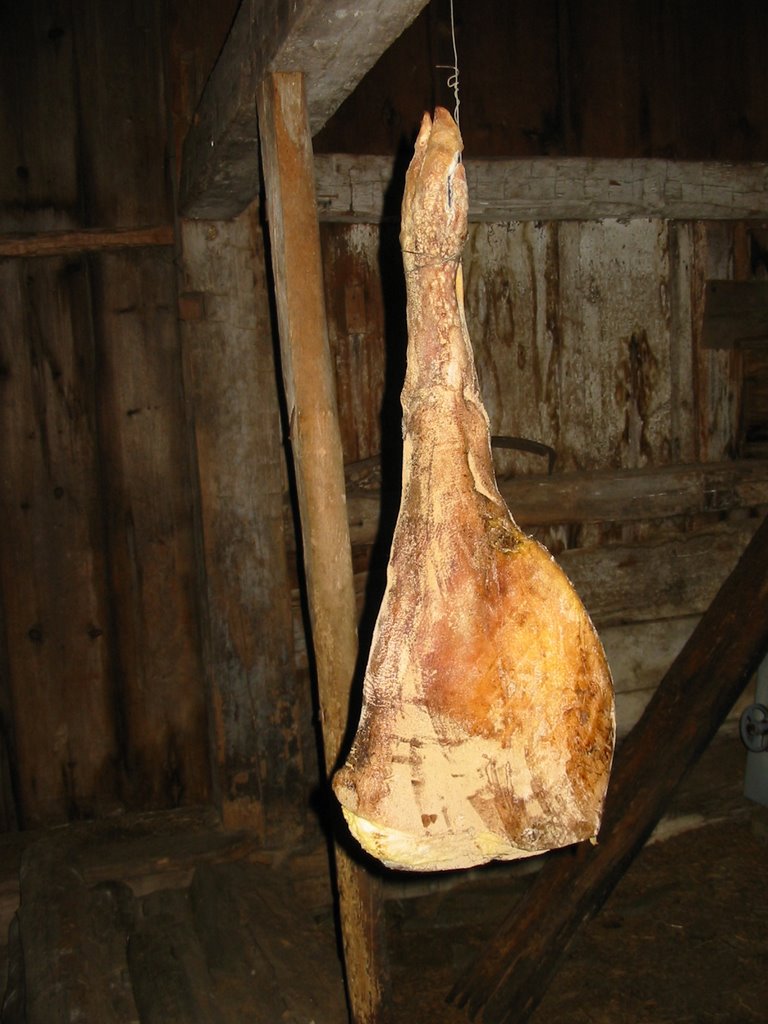
Hanging from the beam of our 1800s English style barn is my experiment in creating Prosciutto (aged ham). The leg is from a boar (intact male pig) that we had butchered this spring. I salted the leg for about a month, brushed all the salt off and its been sitting in our summer kitchen all summer (stays cool in there) and i finally got around to hanging it in the barn so it can continue the aging process. I still need to render some lard from the pork fat i have in the freezer. The lard is applied to the leg which helps the aging process. It takes a year or two to create prosciutto and you don't know if you have succeeded until you slice some off and taste it. So next spring or fall I will report back with the results!

Asa's Windsor High Chair

I finally made some time to get back to work on Asa's Windsor high chair that I started last winter. I have a woodshop in the attached woodshed to our old farmhouse. We have a copy of a copy of the work order for the construction of this woodshed that spells out the work to be done by whom and at what cost (part to be paid in cattle, part to be held in a note). It also includes a list of materials for the job and some math scribbled about. The date of the document is 1833.

Anyway - the legs and arm spindles on Asa's chair are from an old maple tree out back that I harvested since it was dying and crowding another nice maple. I split out firewood size sections of the maple, rounded them out with a hatchet, then chucked them in the wood lathe and turned them to shape. The seat - of poplar- is chopped, carved, drawknifed and spokeshaved to shape with old hand tools. I still have to finish the curved arm and back, back spindles and head crest. Once that is done it will be painted and waxed for Asa to put to work.

A visit to camp


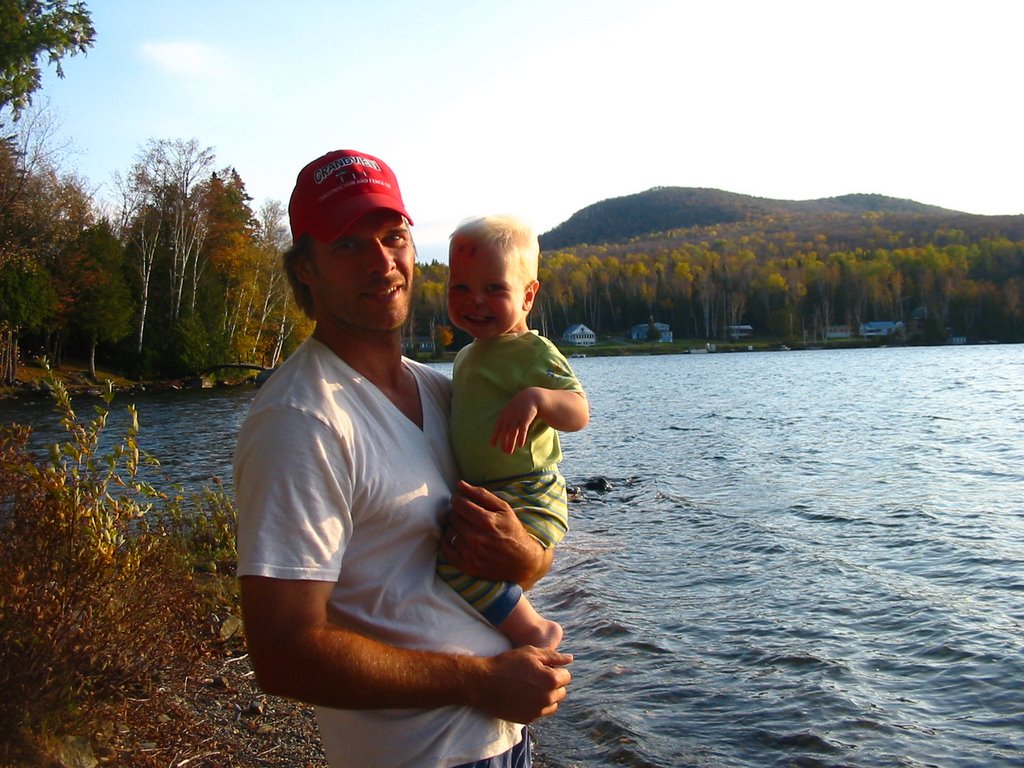
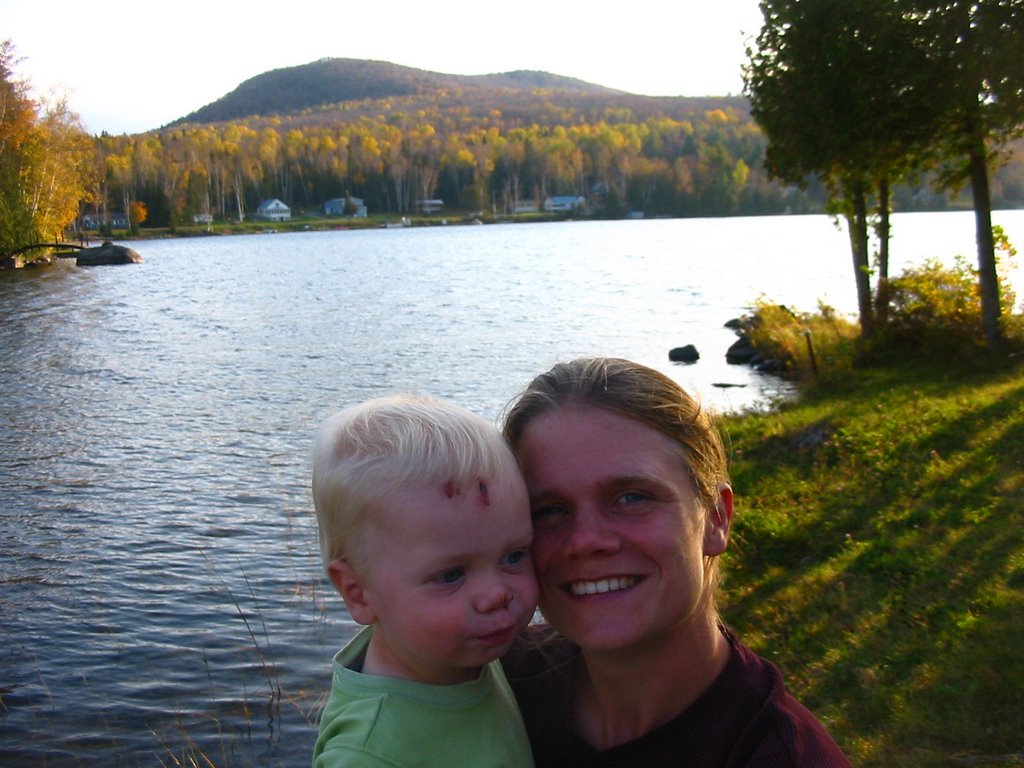
We made a visit to "camp" up in the Northeast Kingdom of Vermont. The visit was partly to get off the farm for a bit (24hrs anyway) and to celebrate our wedding anniversary. Christa's folks own a small camp on a lake -as you can see in the photos. We seldom get up there since we started farming, but with no broilers to raise, lambs all shipped to the slaughterhouse, and the gardening winding down, we made some time to get out with Asa and enjoy walking around and canoeing on the lake. The day we drove out was very warm for early October - in the 70s.

Monday, October 02, 2006

Planning for hot-dry-freezing weather


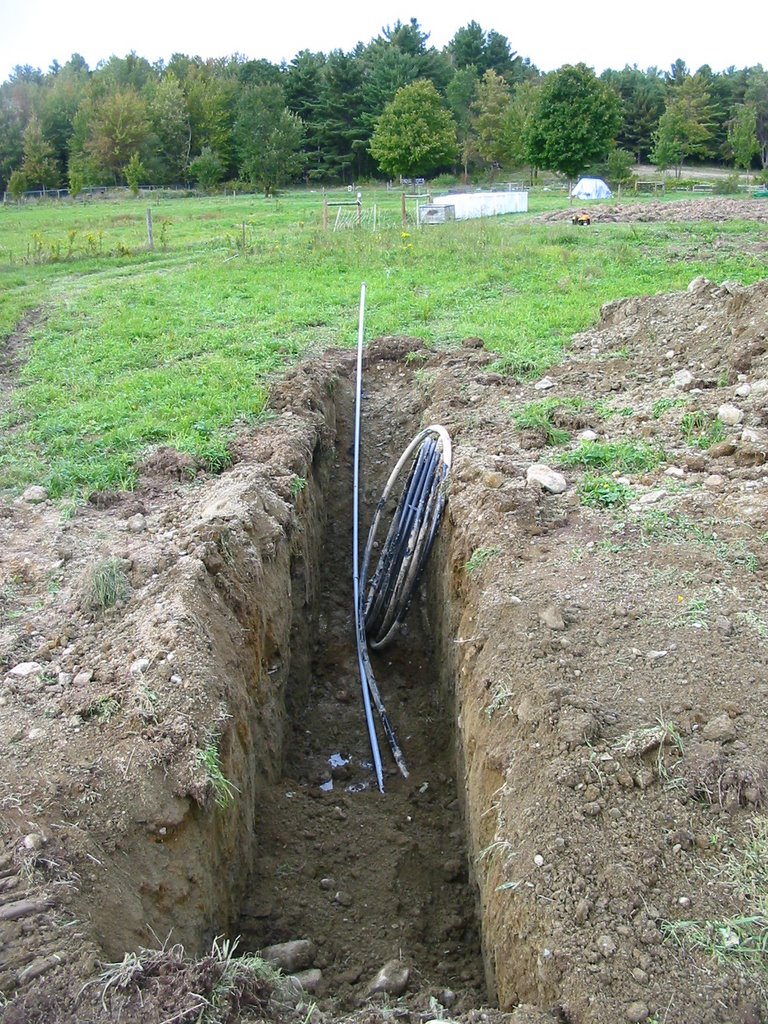
We made the decision that the farm needs to invest in a reliable water source for summer vegetable crop irrigation, pasture irrigation and livestock watering in summer and winter. So we made a sizeable investment by having contractors tap into an existing drilled well on the property and bury water line w/hydrants and powerline to our crop fields, and pasture. We have been tapping into the house shallow well down across the road near a stream. We were lucky it was a wet year and had no problems watering our livestock and crops. But we could see the writing on the wall for the future growth of the farm, the need for a reliable water supply on the farm, and the honest fact that I don't want to haul water in 5 gal buckets for the pigs and laying hens this winter!

The Late Blight!


Our potatoes and tomatoes got hit by a late blight. Blight is caused by a fungus that eats away at the fruit and vines. It came in on some wet, cool, windy weather in late August and within a few days the plants started to wither and die. We sent a sample to the University of Vermont Plant Sciences Dept and they confirmed that it was Late Blight. So we have to destroy the blight affected fruit and all the vines through fire or deep burial. Fire is more exciting so we went that route. But we are bummed as we planned on having hoophouse tomatoes through October and we had to destroy alot of green fruit that were on their way to ripe tomatoes! That is farming though, you roll with the punches and move on. I am glad that we are a diversified farm and can rely on other sources of income from the farm that are not affected by plant disease: The beef, pigs, lamb and chickens are all doing well and will be "harvested" this fall.

Monday, September 04, 2006

Ernesto damages chicken pens!


Hurricane Ernesto - downgraded to a tropical depression - brought some mighty fine winds to our farm! Two of our 6 pasture pens we use for moving our chickens across the fields were blown over and bent. We lost 12 birds due to crushing and hypothermia (rain and wind). We spent half of the day repairing pens and getting the birds back under cover with food and water. They looked much better later in the day. We hammered in some steel posts at the corners to hold pens down. Should have done that the night before and could have saved ourselves and the birds some trouble!

Celebrity Farming!


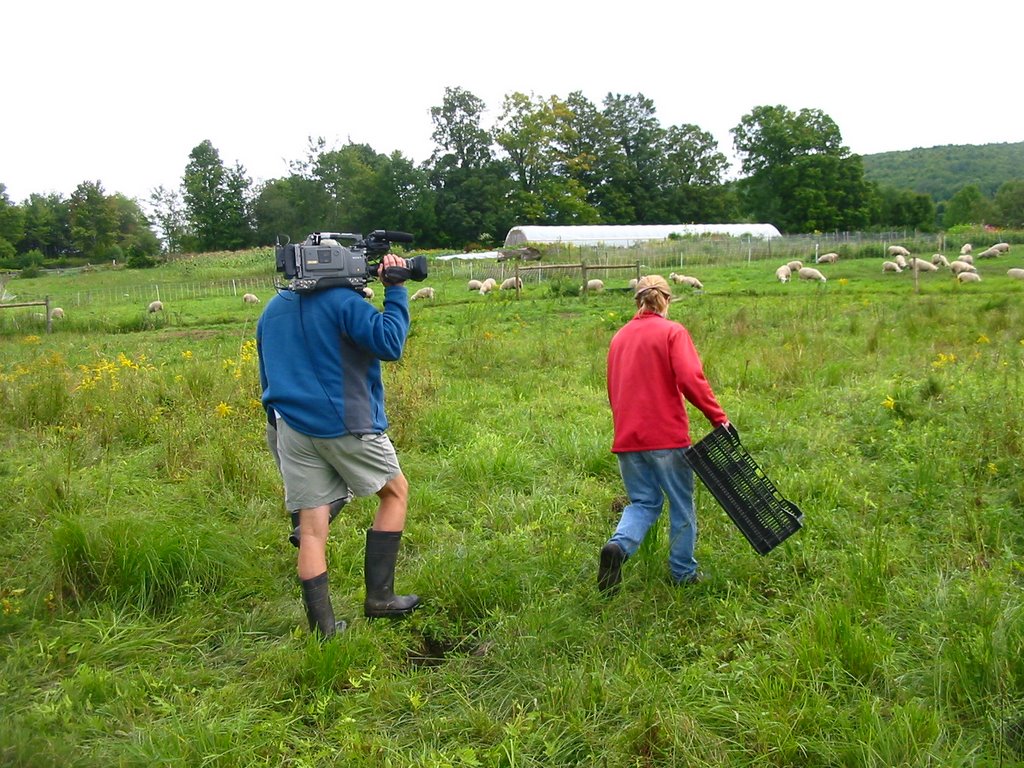
Do you ever feel like someone is following you while you are doing farm chores? It happened to Christa last week. Our farm and the farmers were being filmed for the Womens Agriculture Network (WAGN) program. They will be including our farm as part of their online curriculum - streaming video. Christa was a graduate of their program about 5 years ago. So the Director Beth, Film man Jeff and Sound guy Chris followed us around while doing chores and then sat us down and interviewed us about how we got started in farming, what the challenges are, and what the future holds. We hope our farm and experiences are helpful to other prospective farmers. We need more small farmers to grow good food and connect with their communities!

Wednesday, August 16, 2006

Vermont Pastured Meats

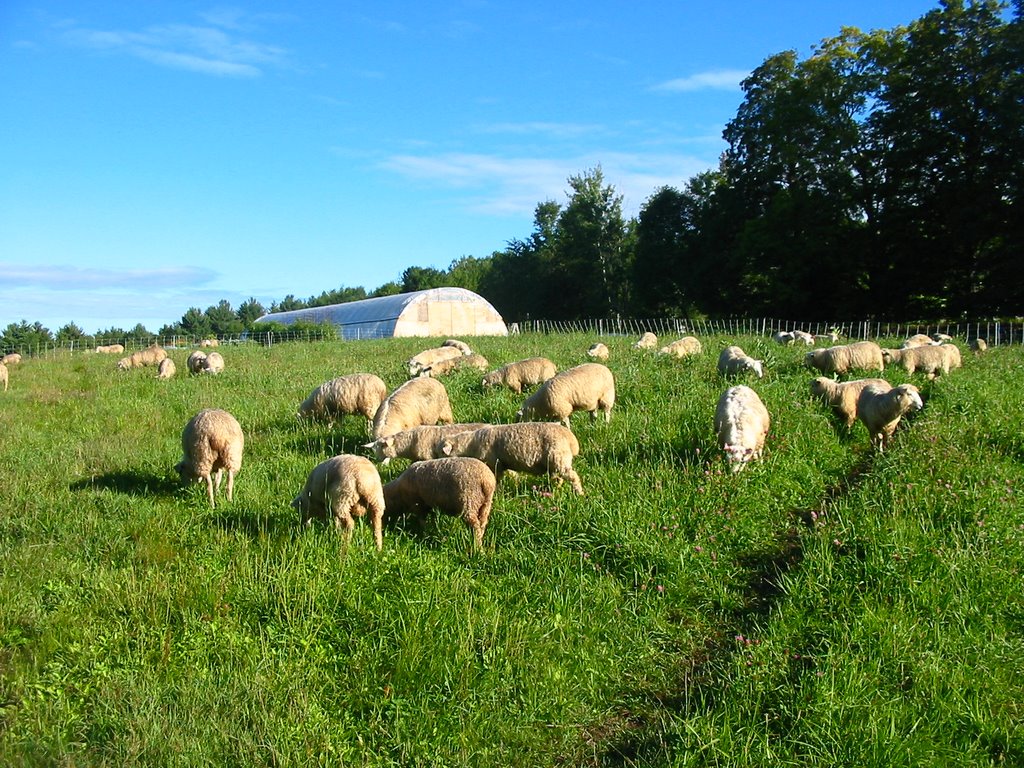
The sun is shining and the grazing is good!

The lambs are looking fat and happy grazing on their paddock. They get a fresh slice of pasture every 1 to 2 days. No grain for these ruminants, their physiology is set up to process grass and they do a wonderful job of converting it to lean flavorful meat. Lamb is a favorite of our customers and we sell out of them early every year - even though we have increased the numbers we graze on our farm every year!

Our pigs like their pasture as well. We give them a larger paddock to graze and root around in. We move them to a new piece of pasture every 2 to 3 weeks. The pigs are monogastric (like us humans) and we supplement their pasture with cheese cut-offs from a cheese plant, vegetables, out of date store milk, and occaisonally some grain. The resulting pork has unbelievable flavor from pigs raised in this manner! We still have pork available and will be sending a batch to be processed in October. Visit our farm at www.jerichosettlersfarm.com to learn more about what we raise and grow at our family farm and how to purchase these and other healthful meats.